The AI Excuse Is Wearing Thin
Another week, another wave of tech and corporate announcements framing job cuts as an inevitable consequence of AI. The narrative is becoming familiar: automation is here, efficiency is everything, and workforces must shrink to stay competitive in the future.
But it’s worth asking a more uncomfortable question: how much of this is genuinely about AI, and how much is about organisations finally confronting economic reality while using AI as a convenient explanation?
We are not operating in a neutral or booming environment. Many economies are effectively in a prolonged low-growth cycle. Interest rates have reset the cost of capital. Global supply chains remain fragile. Geopolitical instability continues to escalate, with disruptions like tensions in the Strait of Hormuz adding further volatility to energy markets and trade confidence. And importantly, many organisations never truly recovered from the numerous distortions kicked off during COVID era - they simply delayed structural decisions, absorbed demand spikes, and are now facing the accumulated consequences.
AI is part of the story, but it is not the whole story.
Honesty matters more than narrative control
AI is undoubtedly changing how work gets done. It is improving productivity, streamlining operations, and reshaping roles across almost every function. Using AI as a blanket justification for workforce reduction - without clarity about broader financial pressures, strategy shifts, or organisational design choices - risks eroding trust faster than any efficiency gains can compensate for.
Employees are aware of macroeconomics. They can see cost-of-living pressures, slowed hiring, tightening margins, and leadership teams under pressure from boards and investors. What they struggle with is not change itself, but narrative inconsistency: when structural economic decisions are framed purely as technological inevitability.
At some point, organisations need to be honest. If costs are being cut because growth is slower than expected, say that. If margins are under pressure, say that. If business models are being reshaped after years of over hiring or demand distortion, say that too. Treating AI as the singular explanation may be convenient, but it is increasingly transparent and ultimately counterproductive.
AI is not the end of work, but it is the end of some roles
There is no doubt that AI will remove certain roles or significantly reduce the need for some tasks. This sounds like a threat, but it’s more that it is a structural shift that has accompanied every major technological wave.
But the more important question is not what disappears, but rather what replaces it.
The companies that are succeeding are not simply shrink their workforce in response to automation. They are actively redeploying people into areas where human capability becomes more valuable. That means deliberately shifting investment into roles that AI cannot replicate at scale, such as:
Deep relationship building with customers and partners
High-trust leadership and team development
Complex problem-solving that requires judgement and context
Innovation and experimentation
Creative thinking and strategy formation
Cultural stewardship and organisational alignment
These are not “soft” functions. They are the core drivers of differentiation in an environment where most companies have access to similar AI tools. This requires investment, leadership capability and organisations to stop treating AI as a cost-cutting tool first and a capability tool second.
The real risk is short-term thinking disguised as transformation
Too many leaders are treating AI as a shortcut, an opportunity to accelerate cost reduction decisions they were already considering, while framing them as innovation-led transformation. This approach carries a hidden risk: it optimises for short-term survival at the expense of long-term capability.
Leading organisations do not respond to technological change by hollowing out their workforce and hoping systems will fill the gap. They redesign work intentionally, invest in reskilling, communicate transparently, and critically, they bring their people with them through change rather than treating them as expendable inputs. Without that, AI becomes a cover story for underinvestment in leadership, culture, and strategy.
Employees are paying attention
Today’s workforce is far more informed and far less passive than in previous cycles. People understand macroeconomic conditions. They understand when companies are overcorrecting. And they understand when AI is being positioned as a justification rather than a genuine driver of change.
What they want is honesty instead of certainty. They want leaders who can say: this is what is changing in our market, this is what it means for our business, and this is how we plan to adapt together.
They want to know whether AI is being used to enhance their work or replace it without a broader plan for redeployment or growth. Most importantly, they want to work for organisations that see people as long-term assets, not short-term costs.
Where leadership actually matters
The organisations handling this well are not the ones making the fastest cuts. They are the ones making the clearest decisions.
They are investing in upskilling before displacement becomes structural, redesigning roles rather than simply deleting them, and they are communicating with enough honesty that employees can understand not just what is changing, but why.
They recognise a simple truth: change without trust creates fear, and fear destroys culture faster than any technology can rebuild it.
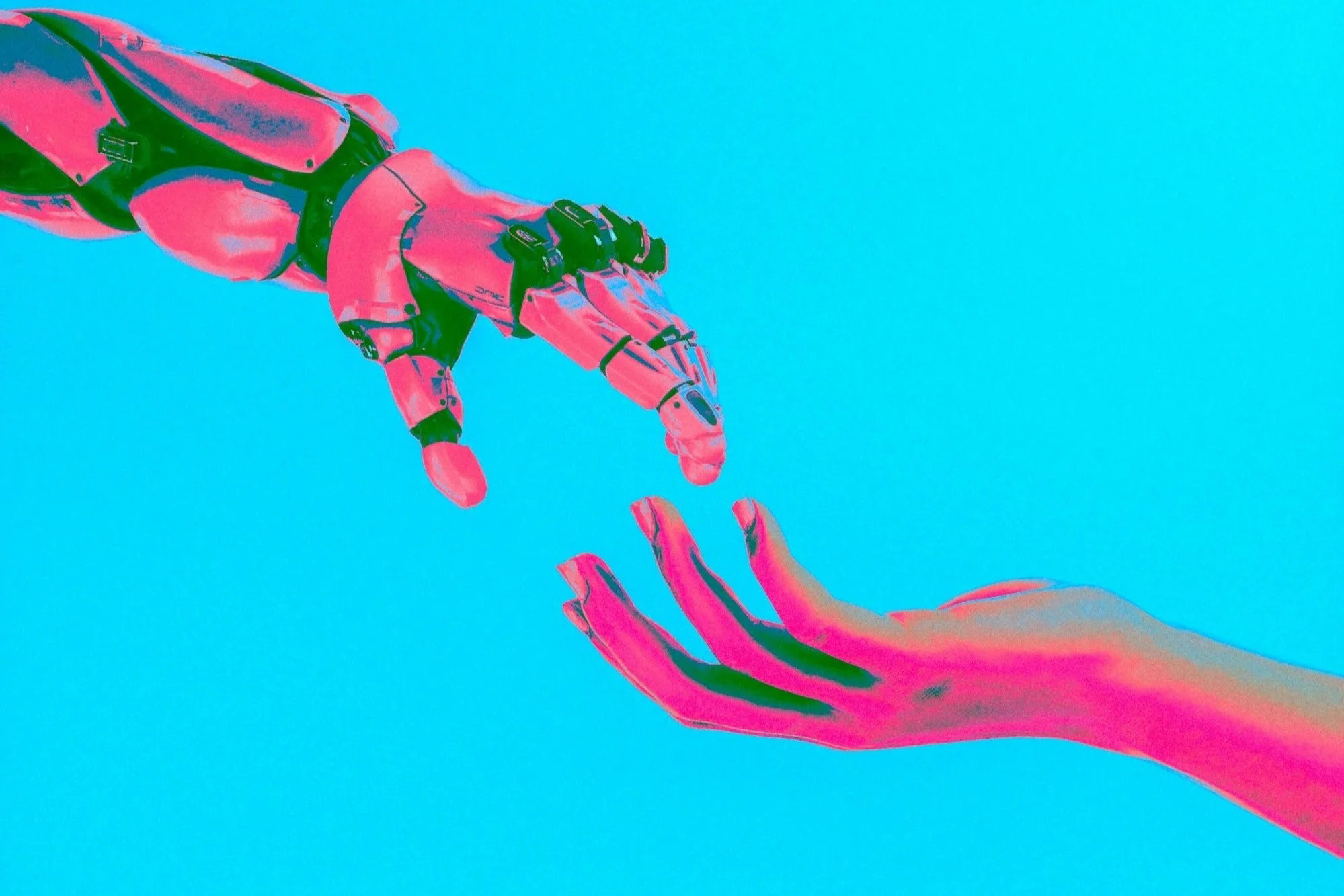
The future of work is not AI versus humans. It is AI alongside humans. The organisations bold enough to embrace that reality - instead of hiding behind AI as a justification for cuts - will ultimately outperform those that don’t.
Technology will continue to evolve rapidly, that is inevitable. However, companies will still succeed or fail based on people: the quality of their leadership, the strength of their culture, and their ability to bring employees with them through change.
The future of work may be shaped by technology, but its success will always be profoundly human.
#WorkplaceCulture #ArtificialIntelligence #AI #Wrkplus #EmployeeEngagement #Leadership #HR #FutureOfWork #WRKplus #CompanyCulture #PsychologicalSafety #TalentRetention #ProfessionalDevelopment